Address
304 North Cardinal
St. Dorchester Center, MA 02124
Work Hours
Monday to Friday: 7AM - 7PM
Weekend: 10AM - 5PM
Astrology is both ancient and enduring. For thousands of years, people from all cultures have looked to the skies for guidance, patterns, and meaning. But in today’s modern world, the question often arises: is astrology a science, or is it simply a belief system?
To answer this, we need to understand what astrology truly is – and what it isn’t.
Astrology is not a science in the traditional sense. It does not rely on laboratory experiments, physical evidence, or mathematical proof in the way that chemistry or biology does. You cannot weigh a planet’s influence or measure a personality trait with a machine.
Instead, astrology is a symbolic language that interprets the positions of the planets and stars as metaphors for human experience. It’s based on observation, pattern recognition, and interpretation – much like art, literature, or psychology.
Throughout history, astrologers have tracked how celestial events mirror life on Earth. Over centuries, they noticed patterns: people born under certain signs tended to express particular qualities, and planetary alignments often coincided with changes or events in human lives.
These observations form the foundation of astrology – not scientific proof, but meaningful correlation.
While astrology isn’t a science, it’s also not a religion. It doesn’t ask for worship, and it doesn’t claim to connect you with a deity. Instead, it offers a framework for understanding yourself and the world around you.
Astrology invites reflection. It helps people notice inner dynamics, recurring themes, and life patterns. Some view it as a tool for self-discovery, while others use it for spiritual insight or emotional clarity. In this way, belief plays a role – just as it does with therapy, meditation, or art.
You don’t need to believe in astrology as a fixed truth. You can simply explore it as a map of symbols, a lens through which to view your inner world.
Modern astrology often overlaps with psychological insight. It reflects archetypes – universal patterns of behavior and experience – that were also explored by figures like Carl Jung. Jung himself viewed astrology as a system full of psychological wisdom and symbolism.
For example, Mars in astrology represents action, desire, and conflict. Whether or not one “believes” in Mars doesn’t matter as much as how that symbol invites you to explore your own assertiveness, motivation, or temper.
In this way, astrology functions more like a mirror than a machine. It shows you yourself – but it doesn’t force a particular belief or prediction.
There is one part of astrology that is scientific: the astronomy behind it. Astrologers calculate the positions of planets, stars, and angles using precise astronomical data. Your birth chart is a snapshot of the sky at the moment you were born – and creating it requires accurate time and place.
But interpreting that snapshot is an art. It takes intuition, knowledge, and experience to translate planetary placements into something meaningful. Two astrologers might read the same chart differently – just as two therapists might offer different perspectives on the same story.
So, is astrology science or belief? It is neither, and both. It is a living system that speaks to the human need for meaning, connection, and insight. It blends cosmic movement with personal reflection. It bridges the outer universe and the inner world.
If you’re curious about whether astrology resonates with you, the best way to find out is to explore your own birth chart. Not just your zodiac sign – but the full picture of who you are, based on the moment you entered the world.
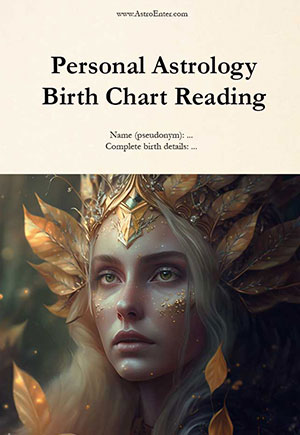
To begin, you can try a Personal Astrology Birth Chart Reading. This reading is based on your exact date, time, and place of birth, and it offers a detailed look at your personality, emotional needs, strengths, and deeper life patterns.
You don’t have to treat astrology as science – or believe in it completely. Just allow it to reflect something meaningful. Many people are surprised by how accurate, inspiring, and clarifying it can be.
Because astrology doesn’t require belief. It only requires curiosity.