Address
304 North Cardinal
St. Dorchester Center, MA 02124
Work Hours
Monday to Friday: 7AM - 7PM
Weekend: 10AM - 5PM
Every few years, the internet buzzes with claims that there’s a “new zodiac sign” shaking up the traditional astrological system. You might have seen headlines about Ophiuchus, the so-called 13th sign, suggesting that your zodiac sign has changed. But is there really a new horoscope sign—and should you start identifying as something else?
Let’s uncover the truth behind this popular myth and explore what astrologers actually say about Ophiuchus.
The idea of a 13th zodiac sign comes from a NASA statement that explained how the Earth’s position relative to the constellations has changed over thousands of years. Due to something called the precession of the equinoxes, the Earth’s axis slowly shifts, altering the apparent alignment of the Sun with the background constellations.
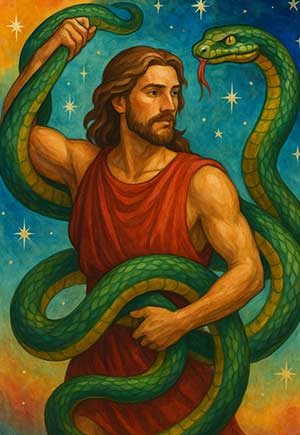
NASA noted that if you look at the constellations as they appear today, the Sun actually passes through thirteen—rather than twelve—constellations during the year. The 13th one is Ophiuchus, also known as “the serpent bearer.”
However, it’s important to understand that astronomy and astrology are two very different systems. While astronomy studies physical space, astrology is a symbolic language based on the Sun’s apparent path through the sky. Western astrologers use a fixed, symbolic framework known as the tropical zodiac, which is not affected by precession.
Ophiuchus is a real constellation located between Scorpio and Sagittarius. In mythology, it is often associated with Asclepius, the Greek god of medicine and healing, who was said to have learned the secret of immortality. The constellation depicts a man holding a serpent—a symbol of wisdom, transformation, and renewal.
If Ophiuchus were to be considered a zodiac sign, it would apply roughly to those born between November 29 and December 17. People under this hypothetical sign are said to be curious, spiritual, passionate about truth, and deeply interested in healing or science.
But here’s the key: Ophiuchus is not recognized as a zodiac sign in astrology.
The twelve-sign zodiac is not based on the number of constellations in the sky—it’s based on the twelve equal divisions of the Earth’s orbit around the Sun. These divisions correspond to the seasons, not the constellations.
In Western astrology, the zodiac starts each year at the spring equinox, with Aries marking the beginning of the cycle. Each of the twelve signs represents one 30-degree segment of the Sun’s 360-degree annual journey through the ecliptic.
This symbolic system connects astrology more closely with the rhythm of nature and the seasons than with the physical placement of stars. So, even though the constellations have shifted slightly in the sky over time, the zodiac signs used in astrology remain the same.
In short:
Astronomy observes stars and constellations in space.
Astrology uses a symbolic system based on Earth’s seasonal cycle.
Therefore, your zodiac sign has not changed.
Even though Ophiuchus isn’t an official zodiac sign, some people find its symbolism meaningful. If you were born between late November and mid-December, you might relate to traits associated with both Scorpio and Sagittarius—passionate, intense, and philosophical.
Many astrologers see Ophiuchus as a bridge between Scorpio’s depth and Sagittarius’s wisdom—a spiritual archetype representing healing, transformation, and truth-seeking. It can be fascinating to explore its mythology as an additional symbolic influence rather than a replacement for your sun sign.
While Ophiuchus might not be a new sign, astrology itself is constantly evolving. Modern astrology now integrates psychological insight, karmic interpretation, and even outer planets that weren’t part of the ancient system—like Uranus, Neptune, and Pluto.
Astrologers today often combine traditional techniques with modern interpretations to explore your full birth chart, not just your sun sign. This includes your Moon, Rising sign, and planetary aspects—all of which make your chart unique.
So, rather than adding a new sign, astrology has grown richer, deeper, and more personal, offering profound insights into emotional patterns, relationships, and soul development.
No, you don’t need to. If you’re a Leo, you’re still a Leo; if you’re a Capricorn, nothing has changed. The tropical zodiac remains the foundation of Western astrology, and all twelve signs continue to hold their traditional meanings.
Astrology is a symbolic language that describes human experience through archetypes—not a literal star map. Your chart represents your energy blueprint, shaped by planetary positions at your birth, and that remains the same regardless of astronomical shifts.
If you’re curious about your complete astrological profile, you can go far beyond your sun sign with a Personal Astrology Birth Chart Reading. Created using your date, time, and place of birth, it reveals how all the planets interact in your chart—offering deep insight into your character, destiny, and year ahead.
With a personalized chart, you can learn:
The meaning of your Sun, Moon, and Rising signs
How planetary aspects shape your relationships and emotions
The influence of your houses on career, love, and personal growth
A 12-month forecast showing key trends and opportunities
Astrology is not about adding or losing a sign—it’s about understanding the complex, beautiful design that already exists within you.