Address
304 North Cardinal
St. Dorchester Center, MA 02124
Work Hours
Monday to Friday: 7AM - 7PM
Weekend: 10AM - 5PM
Tarot cards have fascinated people for centuries. They are more than just a deck of illustrated cards — they are a powerful tool for self-reflection, intuition, and spiritual guidance. Whether you see them as a form of divination or a mirror of your inner world, understanding what tarot cards truly are can open the door to greater awareness and insight.
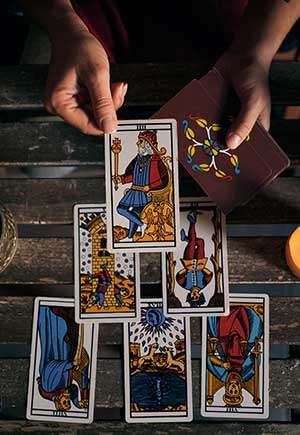
Tarot cards first appeared in Europe during the 15th century, originally as a card game called tarocchi in Italy. Over time, mystics and philosophers discovered that the images and symbols on the cards could be used for spiritual exploration and guidance.
By the 18th century, tarot had evolved into a system of divination. Each card came to represent deeper meanings connected to life’s journey, emotions, and choices. Today, tarot is used all over the world — not just for fortune-telling, but for personal growth and reflection.
A standard tarot deck contains 78 cards, divided into two main groups: the Major Arcana and the Minor Arcana. Together, they reflect every aspect of human experience — from great spiritual transformations to the smallest details of daily life.
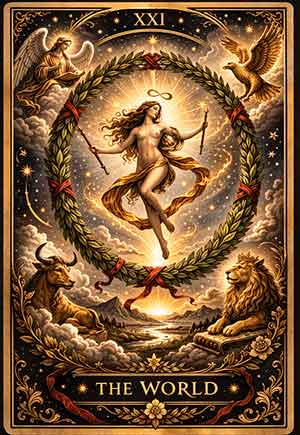
The Major Arcana (22 cards): These are the “big picture” cards, representing major life events, karmic lessons, and stages of the soul’s journey. Cards like The Fool, The Lovers, The Tower, and The World symbolize profound changes and spiritual insights.
The Minor Arcana (56 cards): These reflect everyday experiences, emotions, and challenges. They are divided into four suits: Cups, Wands, Swords, and Pentacles, each connected to one of the four elements — water, fire, air, and earth. Each suit explores a different dimension of life: love, creativity, intellect, and material stability.
Tarot cards are not magic objects that predict the future with absolute certainty. Instead, they act as a symbolic language that communicates with your subconscious mind. When you shuffle and draw cards, your energy and intuition guide you to select the ones that best represent your current situation or the lessons you need to see.
Each card’s imagery speaks through archetypes and universal symbols — patterns that exist in every human experience. The reader interprets these symbols, combining intuition and knowledge to uncover messages that resonate deeply with the person receiving the reading.
In essence, the tarot doesn’t tell you what will happen; it helps you understand why things are happening and what choices you can make to shape your own path.
People turn to tarot for many reasons. Some seek clarity about love or career; others use it as a spiritual compass during times of uncertainty. A tarot reading can help you:
gain insight into your emotions and relationships
see situations from a higher perspective
make more conscious decisions
reconnect with your intuition
explore hidden fears, desires, and patterns
Tarot readings can be done for yourself or by a professional reader. Whether you’re using the cards to find guidance, motivation, or understanding, the tarot’s purpose is always to empower you — never to control or limit your choices.
Every tarot card carries layers of meaning through its colours, numbers, and imagery. For example:
The Sun radiates joy, success, and optimism.
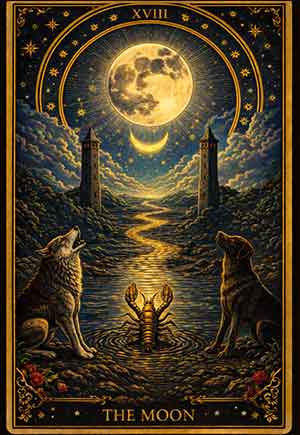
The Moon reveals emotions, illusions, and intuition.
The Hermit encourages introspection and solitude.
The Wheel of Fortune represents destiny and cycles of change.
These symbols are timeless and can be interpreted differently depending on the reader and the context. This flexibility makes tarot a living, evolving system — one that adapts to your personal energy and life experiences.
Today, tarot is not limited to mystics or fortune tellers. Many therapists, coaches, and spiritual teachers use tarot as a tool for reflection and mindfulness. It can help people express emotions, identify patterns of behaviour, and find creative solutions to life’s challenges.
Thanks to the internet and digital platforms, tarot has also entered the modern world — available through apps, online readings, and virtual communities. Yet, despite the technology, the essence of tarot remains the same: it is a bridge between the conscious and the unconscious, the visible and the invisible.
So, what are tarot cards? They are a spiritual language written in symbols and archetypes — a timeless guide that helps you understand your life from a deeper perspective. Each card is a doorway to your intuition, offering insight, comfort, and wisdom exactly when you need it most.
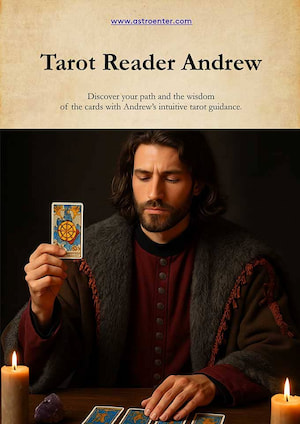
If you feel drawn to explore what the cards might reveal about your journey, tarot reader Andrew invites you to experience a personal reading. His intuitive approach helps uncover the hidden patterns and possibilities shaping your path, guiding you toward clarity and self-understanding.