Address
304 North Cardinal
St. Dorchester Center, MA 02124
Work Hours
Monday to Friday: 7AM - 7PM
Weekend: 10AM - 5PM
Astrology has been part of human history for thousands of years. Long before apps and horoscopes in magazines, ancient civilizations studied the stars to understand themselves, nature, and the divine. But what did ancient cultures really believe about astrology? Was it science, religion, or something in between?
Let’s journey back in time to explore how astrology developed across the ancient world—and how it shaped the way people understood life, fate, and the universe.
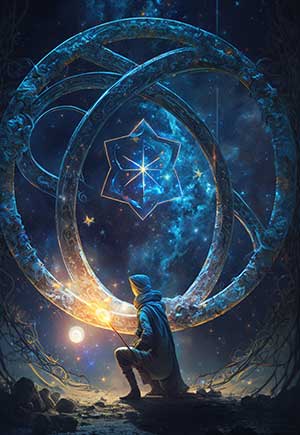
The earliest known astrological systems come from Mesopotamia, the cradle of civilization, around 2000 BCE. The Babylonians observed the night sky carefully and recorded the movements of planets and stars on clay tablets. They believed that celestial events reflected events on Earth, especially those concerning kings, wars, and natural disasters.
Their system eventually gave rise to the zodiac—dividing the sky into 12 sections, each named after a constellation. By 500 BCE, Babylonian astrology began to resemble what we now call horoscopic astrology, with attention to the time and date of a person’s birth.
The planets were messengers of the gods
Eclipses warned of danger or shifts in power
Astrology was a tool for predicting major events, especially in politics
The ancient Egyptians also placed great importance on the stars, particularly Sirius, which signaled the annual flooding of the Nile—a life-giving event. Egyptian priests aligned temples with celestial events and used star clocks to mark sacred time.
While Egyptian astrology was closely tied to astronomy and calendar systems, they also believed in the spiritual influence of the heavens. Each deity was connected to a planet or star, and the movement of these celestial bodies reflected the will of the gods.
The stars linked the divine and earthly worlds
Astrology was connected to soul journeys and the afterlife
Birth dates determined one’s character and fate in the next life
When the Greeks encountered Babylonian astrology around the 4th century BCE, they transformed it into a more individual-focused system. Greek philosophers and mathematicians like Ptolemy refined astrological techniques and introduced the idea of the natal chart—a map of the sky at the moment of a person’s birth.
The Greeks believed that the cosmos was a harmonious whole, and human beings were deeply connected to it. Astrology became a way to understand a person’s temperament, fate, and potential based on the alignment of planets at birth.
Astrology was guided by natural laws and cosmic harmony
Each planet and zodiac sign had specific traits and influences
Personal destiny was written in the stars—but could be shaped by character and choices
In ancient India, astrology—called Jyotish, meaning “science of light”—was a sacred practice deeply tied to spiritual life and karma. Vedic astrology dates back over 3,000 years and is still widely practiced today.
Indian astrologers used birth charts to reveal a person’s past life karma, personality, and spiritual path. Astrology was also used to determine auspicious dates for marriages, rituals, and important life decisions.
The stars reflect karma and the soul’s journey
Each planet (called a “graha”) carries a spiritual lesson
Life events are shaped by past actions and divine timing
Ancient Chinese astrology developed independently from Western traditions and is based on a 12-year cycle, each year associated with an animal sign (Rat, Ox, Tiger, etc.). It also includes the Five Elements (Wood, Fire, Earth, Metal, Water) and the Yin-Yang philosophy.
Rather than focusing on the positions of stars and planets, Chinese astrology is centered around cycles of time and how they interact with your birth year, month, day, and hour.
Astrology is part of a larger system of balance and harmony
One’s birth year reveals character, compatibility, and fortune
Each person is part of a larger cosmic rhythm
Across all these ancient cultures, astrology was more than entertainment—it was sacred knowledge, used by priests, scholars, and rulers. It helped people:
Understand their place in the universe
Make sense of natural and social events
Connect with the divine or spiritual realm
Seek meaning, purpose, and guidance
While the techniques varied from one culture to another, the shared belief was that the sky and human life are deeply connected.
Ancient civilizations didn’t see astrology as separate from religion, science, or philosophy—it was all interconnected. Whether they looked to the stars for personal insight, divine messages, or cosmic order, people across time and culture believed that the heavens reflected truth.
In modern times, astrology continues to be a tool for self-understanding and soul growth. And while we may not worship the stars, we still look to them with wonder—just like our ancestors did.