Address
304 North Cardinal
St. Dorchester Center, MA 02124
Work Hours
Monday to Friday: 7AM - 7PM
Weekend: 10AM - 5PM
The concept of the third eye has been present in spiritual traditions and esoteric teachings for thousands of years. It is most commonly associated with intuition, inner vision, and a deeper perception of reality. Although it is not a physical eye, it is often considered a kind of energetic or spiritual eye that allows one to perceive things beyond ordinary sight.
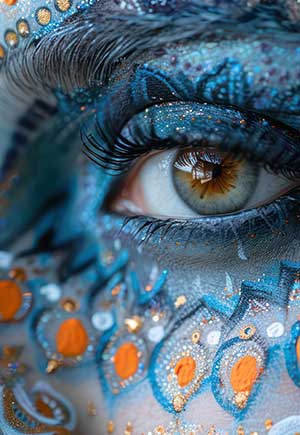
In many cultures, the third eye is seen as the seat of wisdom and higher consciousness. In Hinduism, it is known as the Ajna chakra, located between the eyebrows. This chakra is believed to govern clarity, insight, and the ability to perceive the unseen. In Buddhism, it is also viewed as a symbol of spiritual awakening. In Western esoteric traditions, the third eye is linked to the pineal gland and is often regarded as a gateway to inner worlds, hidden knowledge, and psychic abilities.
Modern interpretations often associate the third eye with the pineal gland, a small, pinecone-shaped organ in the center of the brain. The pineal gland regulates circadian rhythms and produces melatonin, but some believe it also plays a role in spiritual experiences and altered states of consciousness. Although science does not officially confirm the spiritual function of the pineal gland, many spiritual seekers feel a strong connection between the two.
While the third eye is often linked with mystical visions or extrasensory perception, it also plays a subtle role in daily life. A well-balanced third eye is thought to enhance intuition, improve decision-making, and offer a deeper understanding of yourself and others. It may help you notice synchronicities, feel more connected to your purpose, and gain a clearer perspective on life situations. You might describe it as a quiet inner knowing or gut feeling that often turns out to be right.
People who begin to awaken their third eye often report changes in perception, such as vivid dreams, increased awareness, or a stronger connection to their inner voice. Some feel a light pressure between the eyebrows or sense energy in that area. Others begin to question surface-level explanations and feel drawn to spiritual or philosophical knowledge. It is important to note that experiences vary widely, and some changes may be very subtle at first.
There are several myths and misunderstandings about the third eye. Some believe that opening it will immediately lead to visions or supernatural experiences. However, in most cases, third eye development is a gradual process that involves personal growth, inner reflection, and greater awareness. It is also not something dangerous when approached with balance and respect. The goal is not to escape reality but to understand it more deeply.
Although the third eye exists naturally within all of us, it can be nurtured and strengthened through certain practices. Meditation, especially when focused on the space between the eyebrows, is one of the most effective methods. Other supportive tools include visualization, sound healing, mindful breathing, and working with colors like indigo or violet. A healthy lifestyle, good sleep, and time in nature can also support third eye clarity.
The third eye is not just a mystical idea; it represents a deeper way of seeing the world and yourself. Whether you view it as a spiritual energy center, a symbol of awareness, or a connection to higher consciousness, it can become a powerful part of your personal journey. Exploring the meaning of the third eye is ultimately about learning to trust your inner guidance, becoming more conscious, and living with greater clarity.
See What Your Third Eye Reveals